

S2K Commerce - Shopping Cart
Actions
S2K Commerce - Products Dropdown
Actions
Web Content Viewer
Actions
Conventional vs. Addressable Fire Alarm Systems: What ’ s the Best Solution for Your Application?
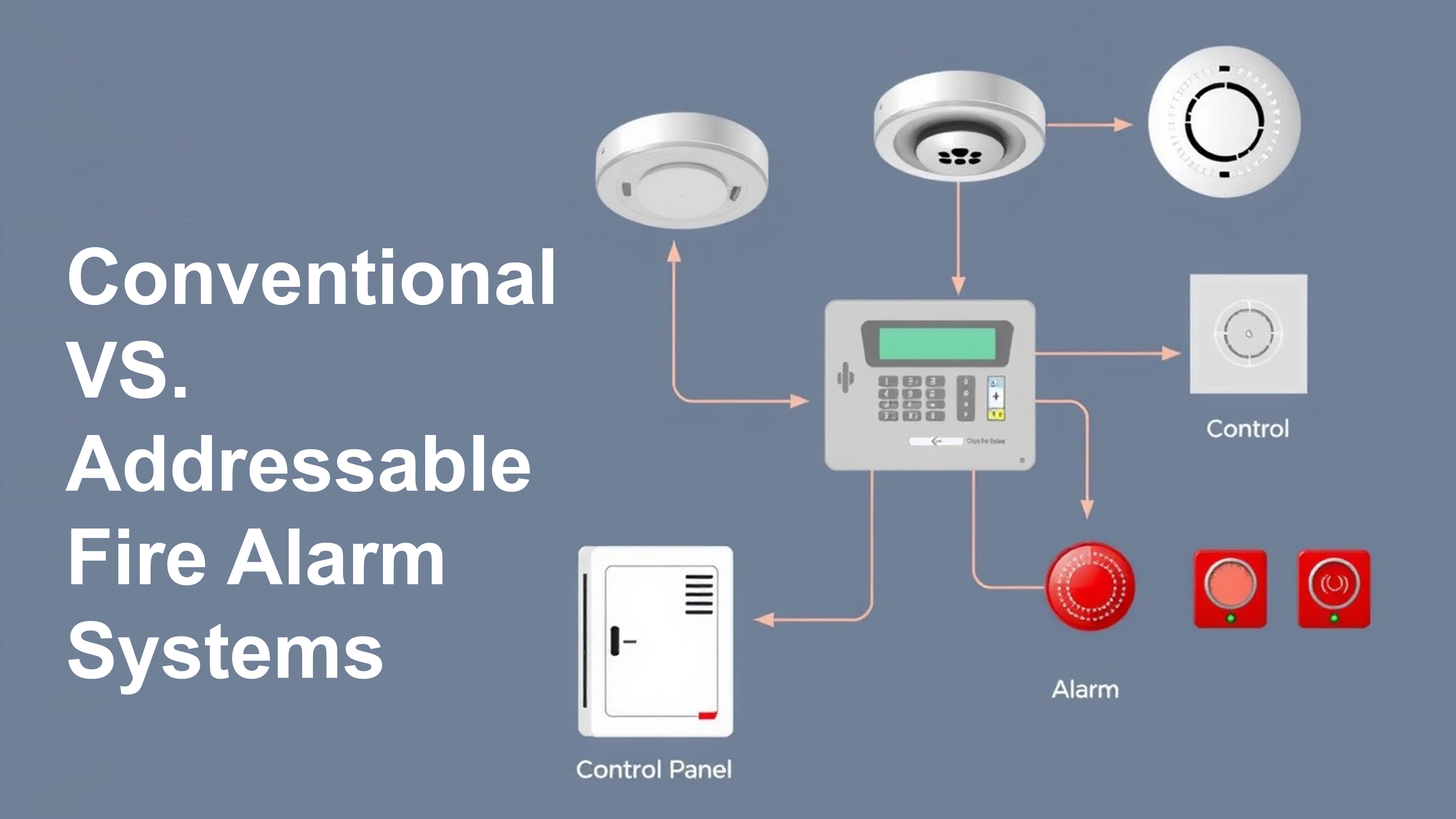
Table of Contents
-
Basics: Understanding Fire Alarm Systems
-
What Are Conventional Fire Alarm Systems?
-
What Are Addressable Fire Alarm Systems?
-
Key Differences Between Conventional and Addressable Fire Alarm Systems
-
Benefits of Conventional Fire Alarm Systems for Your Business
-
Advantages of Addressable Fire Alarm Systems for Your Projects
-
Which Fire Alarm System Is Right for Your Application?
-
Devices Needed for Conventional and Addressable Fire Alarm Systems
-
Real-World Examples: Choosing the Best Fire Alarm System
-
Why Partnering with SDI Matters for Your Low Voltage and Fire System Needs
-
Final Thoughts: Making the Right Choice for Your Business
1. Basics: Understanding Fire Alarm Systems
As a low voltage installer or integrator, selecting the right fire alarm system is crucial for ensuring safety, compliance, and ease of installation. With advancements in fire detection technology, understanding the differences between conventional and addressable fire alarm systems can significantly impact project outcomes, operational efficiency, and end-user satisfaction. This blog will explore these two technologies, their benefits, and the best applications for each, helping you confidently recommend and install the right solutions for your clients.
2. What Are Conventional Fire Alarm Systems?
Conventional fire alarm systems are the traditional type of fire detection technology used in many commercial and residential applications. They are based on simple circuits, where zones or groups of detectors are wired together on separate circuits, known as “conventional loops.” When a detector senses smoke or heat, it triggers the zone, alerting occupants or security personnel.
Key features:
-
Use of multiple separate circuits (zones)
-
Each zone corresponds to a specific area or room
-
Activation of zone indicates the general location of a fire
Conventional systems are often preferred for smaller installations or where budget constraints exist because they are straightforward and cost-effective.
3. What Are Addressable Fire Alarm Systems?
Addressable fire alarm systems are more sophisticated, allowing each detector and device to have a unique address within the system. This capability enables the control panel to pinpoint the exact device that has triggered an alarm, providing precise location data.
Key features:
-
Each device has a unique address
-
The control panel displays the exact device or zone in alarm
-
Advanced programming options for customized responses
Addressable systems are highly scalable and suitable for larger, complex buildings where detailed fire detection and fast response are critical.
4. Key Differences Between Conventional and Addressable Fire Alarm Systems
-
Conventional Fire Alarm Systems
-
Device Identification - Zone-based, less specific
-
Installation Cost - Lower initial cost
-
System Scalability - Best for small to medium projects
-
Trouble shooting - Less detailed, may require testing zones
-
Programming - Limited customization
-
-
Addressable Fire Alarm Systems
-
Device Identification - Unique device address
-
Installation Cost - Higher initial investment
-
System Scalability - Ideal for large, complex applications
-
Trouble shooting - Precise, pinpoint device location
-
Programming - Advanced options for tailored responses
-
Understanding these differences helps you choose the right system based on project size, complexity, and budget.
5. Benefits of Conventional Fire Alarm Systems for Your Business
Conventional systems are a dependable choice for smaller applications, offering several advantages:
-
Cost-Effective: Lower upfront equipment and installation costs make them ideal for small commercial or residential projects.
-
Simplicity: Easier to install and maintain with fewer components.
-
Reliability: Proven technology with long track record.
-
Quick Deployment: Faster installation process suitable for quick turnarounds.
For businesses with straightforward fire detection needs, conventional systems offer a reliable, budget-friendly solution.
6. Advantages of Addressable Fire Alarm Systems for Your Projects
Addressable fire alarm systems shine in larger or more complex environments:
-
Precise Location Detection: Quickly identifies the exact device or zone in alarm, expediting emergency response.
-
Enhanced Monitoring: Capable of monitoring individual devices, like smoke detectors, heat detectors, and pull stations.
-
Flexible Programming: Customizable alarm responses, such as notifying specific personnel or activating other systems.
-
Ease of Maintenance: Detailed system diagnostics streamline troubleshooting and reduce downtime.
These benefits make addressable systems perfect for high-rise buildings, hospitals, schools, and industrial facilities where detailed fire detection is paramount.
7. Which Fire Alarm System Is Right for Your Application?
The decision hinges on several factors:
-
Size and Complexity: Smaller, straightforward buildings typically benefit from conventional fire alarm systems, while larger, intricate structures require addressable technology.
-
Budget Constraints: Conventional systems are more economical upfront but may lack detailed diagnostics.
-
Future Expansion: Addressable systems are more adaptable, making them a good investment for growing facilities.
-
Regulatory Compliance: Always verify local fire codes and standards, some requiring addressable systems for certain applications.
For a balanced solution, consider panels like Napco’s FL-32, which offers the flexibility of choosing between conventional or addressable circuits.
8. Devices Needed for Conventional and Addressable Fire Alarm Systems
Conventional Fire Alarm Devices:
-
Conventional smoke detectors
-
Manual pull stations
-
Conventional fire alarm control panels
-
Notification appliances (horns, strobes)
Addressable Fire Alarm Devices:
-
Addressable smoke and heat detectors
-
Addressable pull stations
-
Advanced fire alarm control panels (e.g., Napco FL-32)
-
Networked notification appliances with individual device control
Choosing the right devices ensures system reliability and ease of maintenance, especially when working with SDI’s extensive product catalog of fire, security, and low voltage solutions.
9. Real-World Examples: Choosing the Best Fire Alarm System
-
Example 1: Small Office Building
A 2-story office with a few conference rooms and open spaces might only require a conventional fire alarm system. Its straightforward zoning simplifies installation and compliance, keeping costs manageable.
-
Example 2: Large Healthcare Facility
A hospital demands precise fire detection and rapid response. An addressable fire alarm system can pinpoint the exact location of a fire, and facilitate swift evacuation and targeted response, while also integrating with other building systems.
-
Example 3: Retail Mall
A multi-tenant retail space benefits from an addressable system to identify specific stores in alarm, minimizing disruption and enabling targeted communication.
10. Why Partnering with SDI Matters for Your Low Voltage and Fire System Needs
SDI (Security Distribution Inc.) is your trusted wholesale partner for low voltage systems, including fire alarms, security systems, access control, and smart devices. With a comprehensive product range and expert support, SDI helps you streamline your installations, reduce troubleshooting time, and ensure compliance with safety standards. Whether you’re installing conventional or addressable fire alarm systems, SDI provides the tools, devices, and technical resources you need to succeed.
Visit https://www.sdilink.com for more information on our products and solutions tailored for low voltage installers and integrators.
11. Making the Right Choice: Empower Your Business with the Best Fire Alarm System
Choosing between conventional and addressable fire alarm systems depends on your project’s size, complexity, and future needs. Conventional systems offer simplicity and affordability for smaller applications, while addressable systems provide precision, scalability, and advanced features for larger or high-risk environments.
By understanding these differences, you can provide your clients with the most effective safety solutions, ensuring peace of mind and regulatory compliance. Partnering with SDI ensures you have access to the latest products and expert support, helping you deliver top-tier low voltage solutions every time.
Final Note
Choosing the right fire alarm system is vital for safety and operational efficiency. Whether you opt for the simplicity of conventional systems or the precision of addressable technology, SDI is here to support your needs with a broad selection of products, tools, and technical expertise. Visit https://www.sdilink.com to discover how we can help you deliver exceptional low voltage solutions for your clients.
SDI